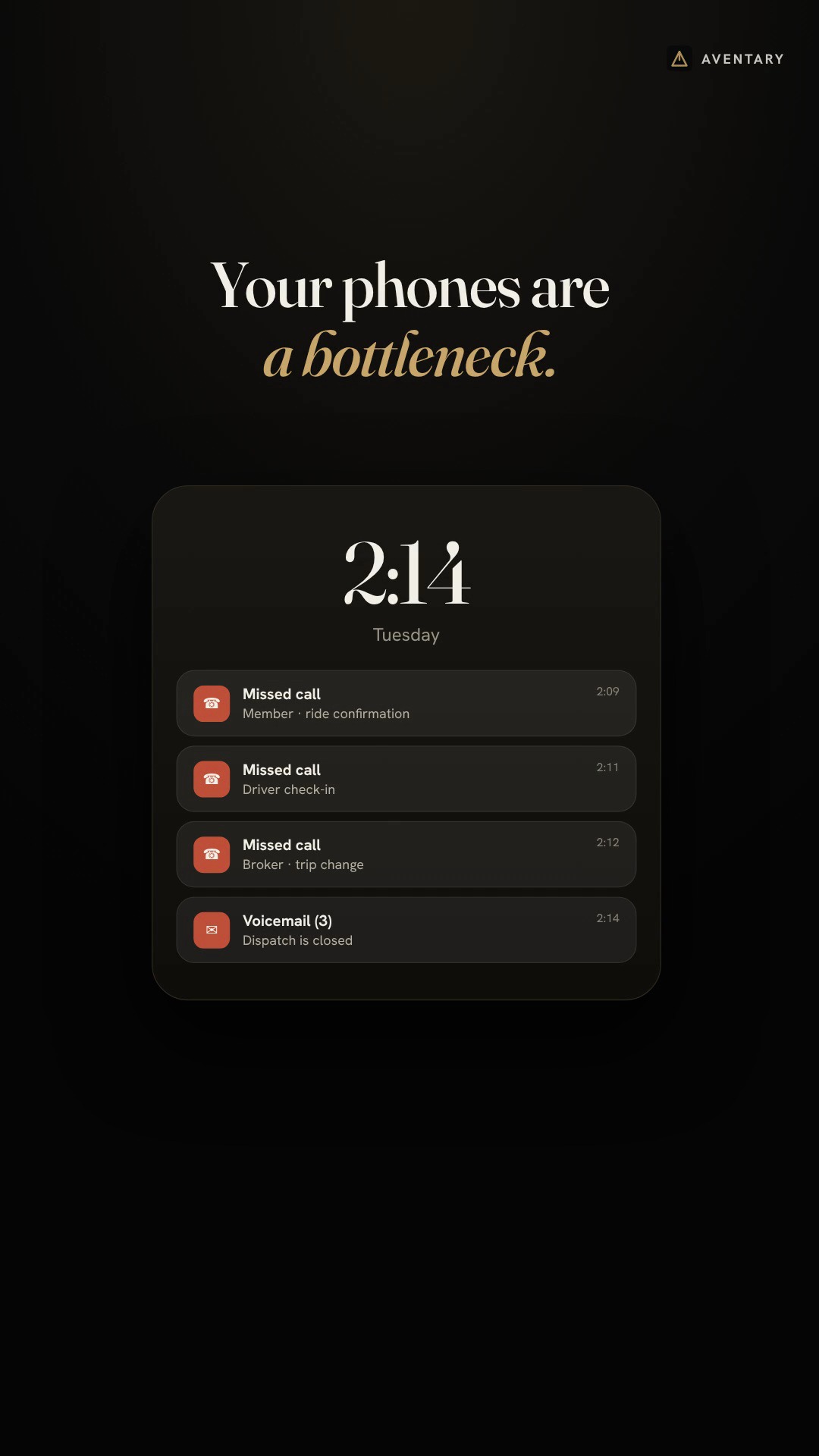
Your Phones Are a Bottleneck.
Missed call, missed call, missed call, voicemail: dispatch is closed. Voitra answers before the ring finishes, confirms the ride, and offers the text reminder. Forty-eight hours from signup to taking real calls, round-the-clock after-hours coverage, and a proof of concept on your own workflow at no cost.

Leads Waited Days for a First Reply.
A 2,500-lead backlog nobody was answering. An AI SDR classifies out spam and support, scores propensity to buy, engages over email and chat around the clock, qualifies on a 0-to-12 BANT scale, escalates hot leads to a human, and books the meeting itself once the score crosses the line. Zero leads left in the backlog, about a minute to assign a lead where it used to take days, and double the lead throughput. Built via PwC.
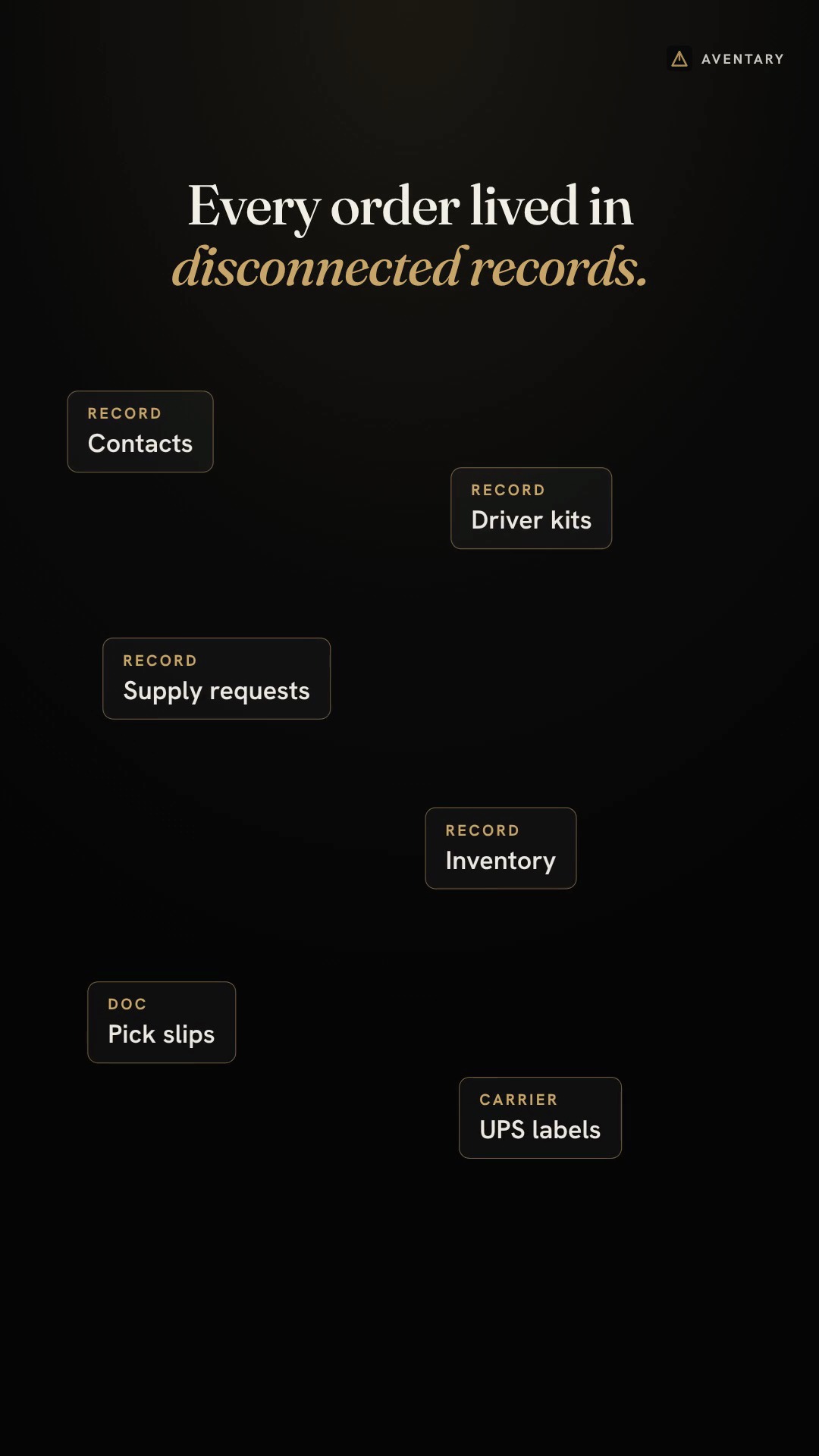
Every Order Lived in Disconnected Records.
Contacts, driver kits, supply requests, inventory, pick slips, UPS labels: every order spread across records that never spoke to each other. The fulfillment hub pulls them into one traceable workflow from supply request to shipment, surfaces problems before anything ships, and prints a UPS label from the phone. Nine-stage guarded production rollout, one workflow end to end, twenty-two historical label links repaired.
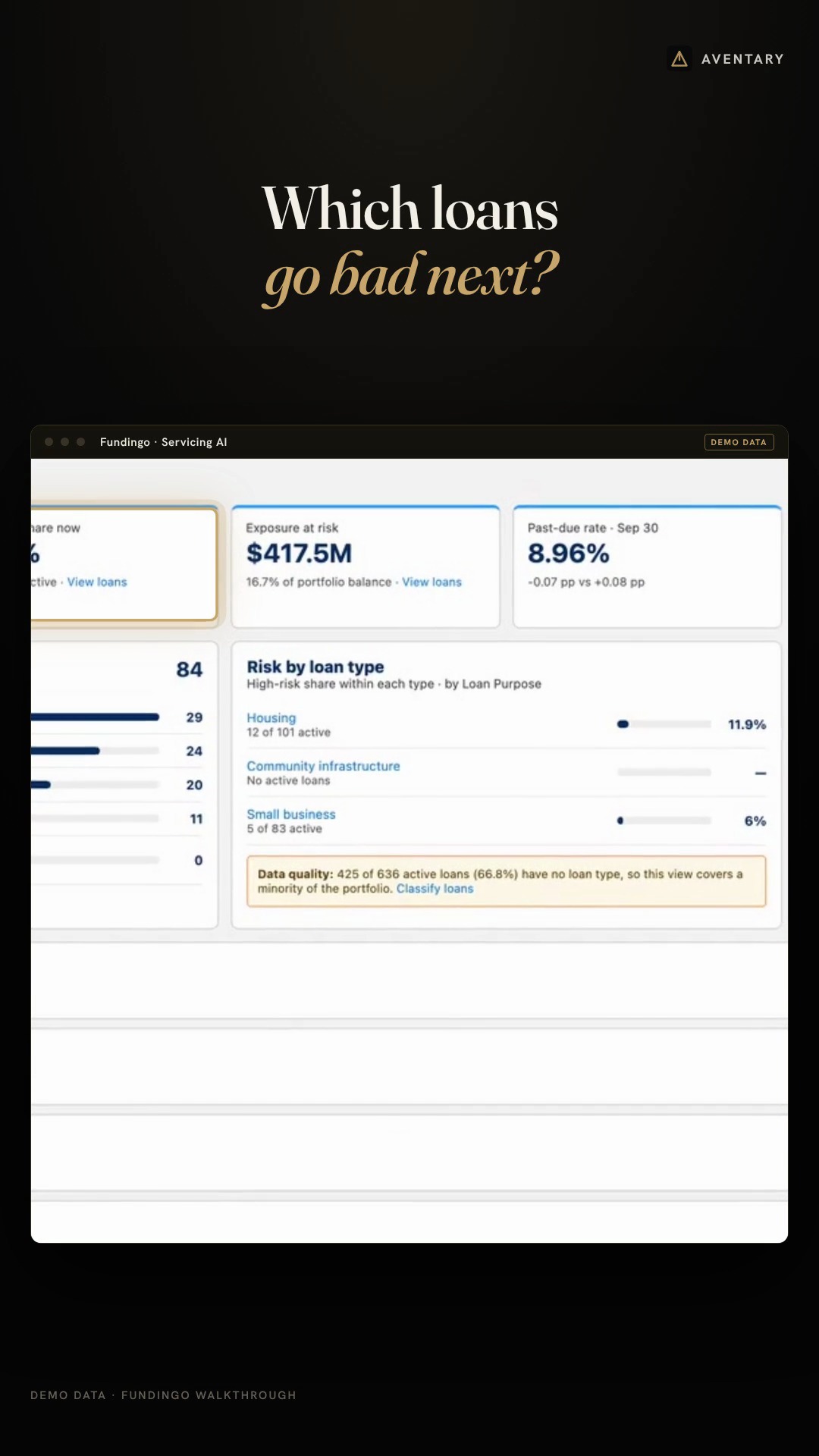
Which Loans Go Bad Next?
Exposure at risk, past-due rate, risk by loan type: the portfolio tells you where it hurts today, not which loans turn next. Servicing AI learns early-warning rules from one to two hundred of your own past good and bad loans, drafts the borrower message, and waits. You approve every rule before it runs.
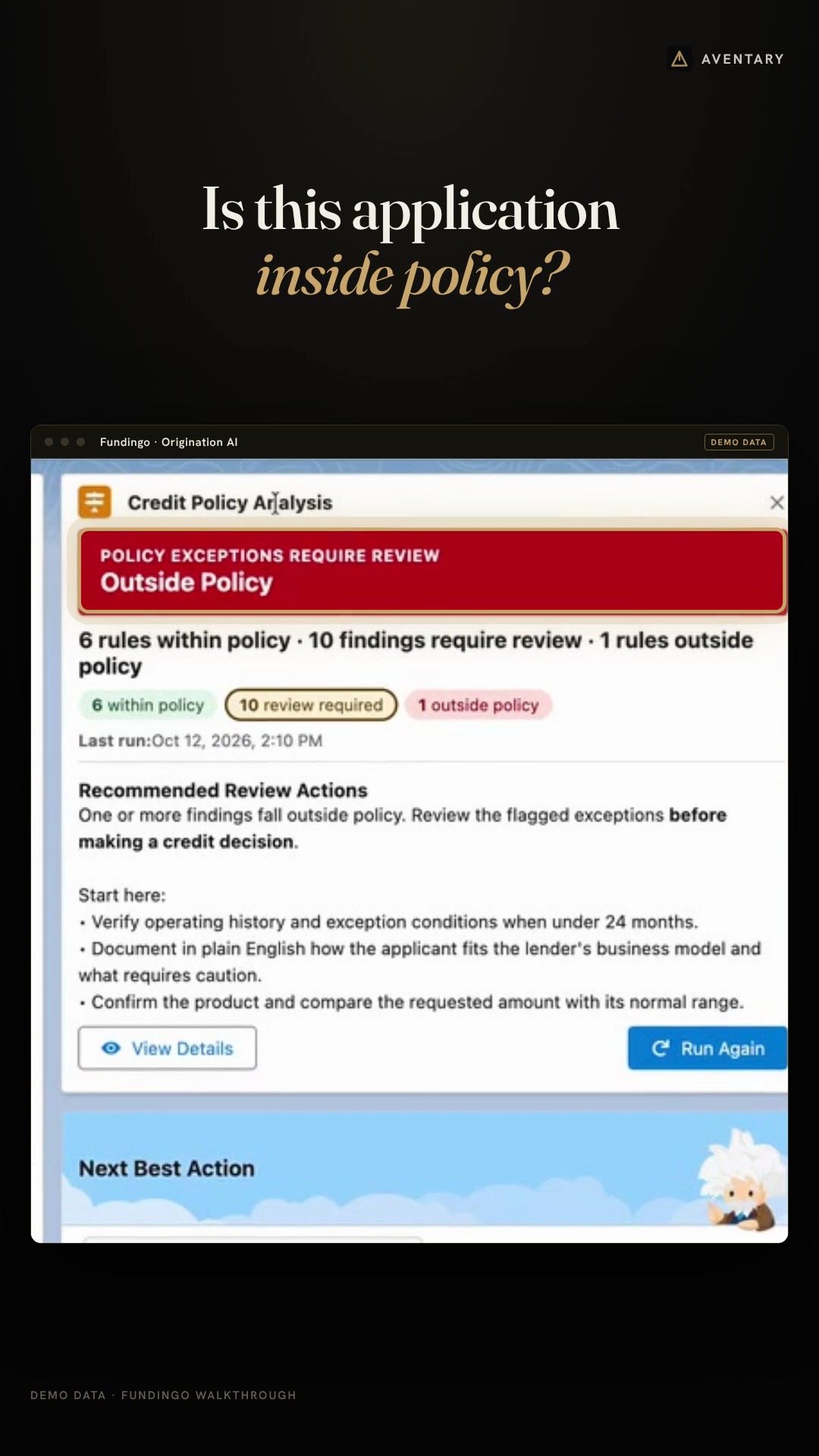
Is This Application Inside Policy?
Credit policy lives in a document; underwriters apply it from memory. Upload the policy and the rules write themselves, then every application is checked against them: rules within policy, findings that require review, and the ones that fall outside. The screen shows exactly what the agent did and why. Five underwriting POCs shipped for Fundingo, each under a week from build to demo.
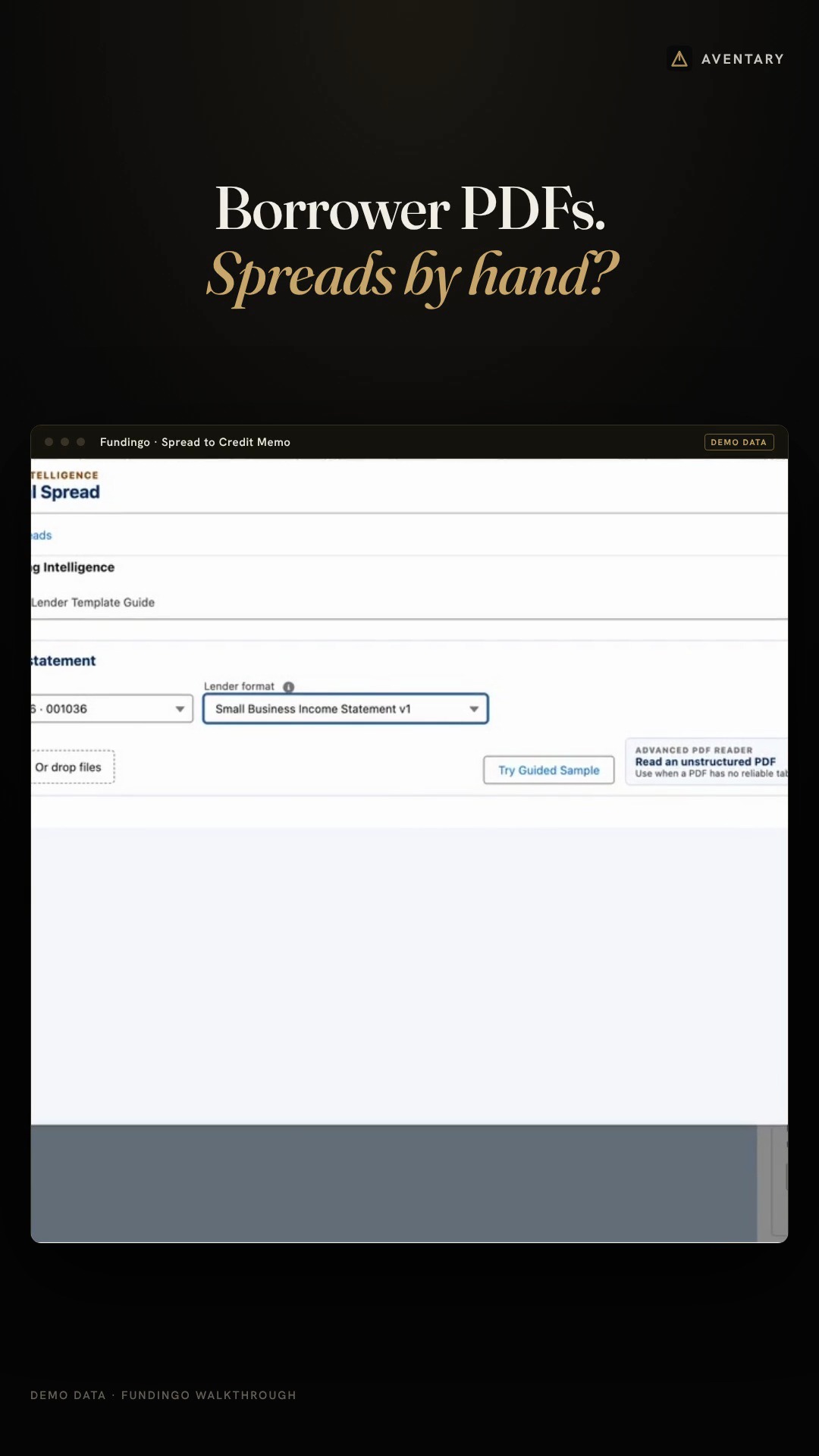
Borrower PDFs. Spreads by Hand?
A borrower sends a PDF income statement and somebody retypes it into a spread. Here the PDF goes in and the spread comes out: imported, mapped, reconciled against the source, exceptions surfaced. The approved spread drops into the credit memo, and one PDF export carries both the spread and the policy analysis. One flow, start to finish.

The Carpool Group Chat. Every. Single. Morning.
Every school carpool runs on the same broken group chat: whose turn is it, where is the car, has my kid been picked up. Carpool Circle replaces it with a live map, a running pickup order, and alerts only when they matter. Idea to App Store in five weeks.

Three Bids. $1.39M Apart. Same Scope?
Three subcontractor bids on the same scope came in $1.39M apart. Leveler Workbench plugs every gap, levels every bid to a common basis, and catches every exclusion buried in the fine print, ranked by dollars. Leveling that took three weeks now takes three days, a 90 percent reduction.
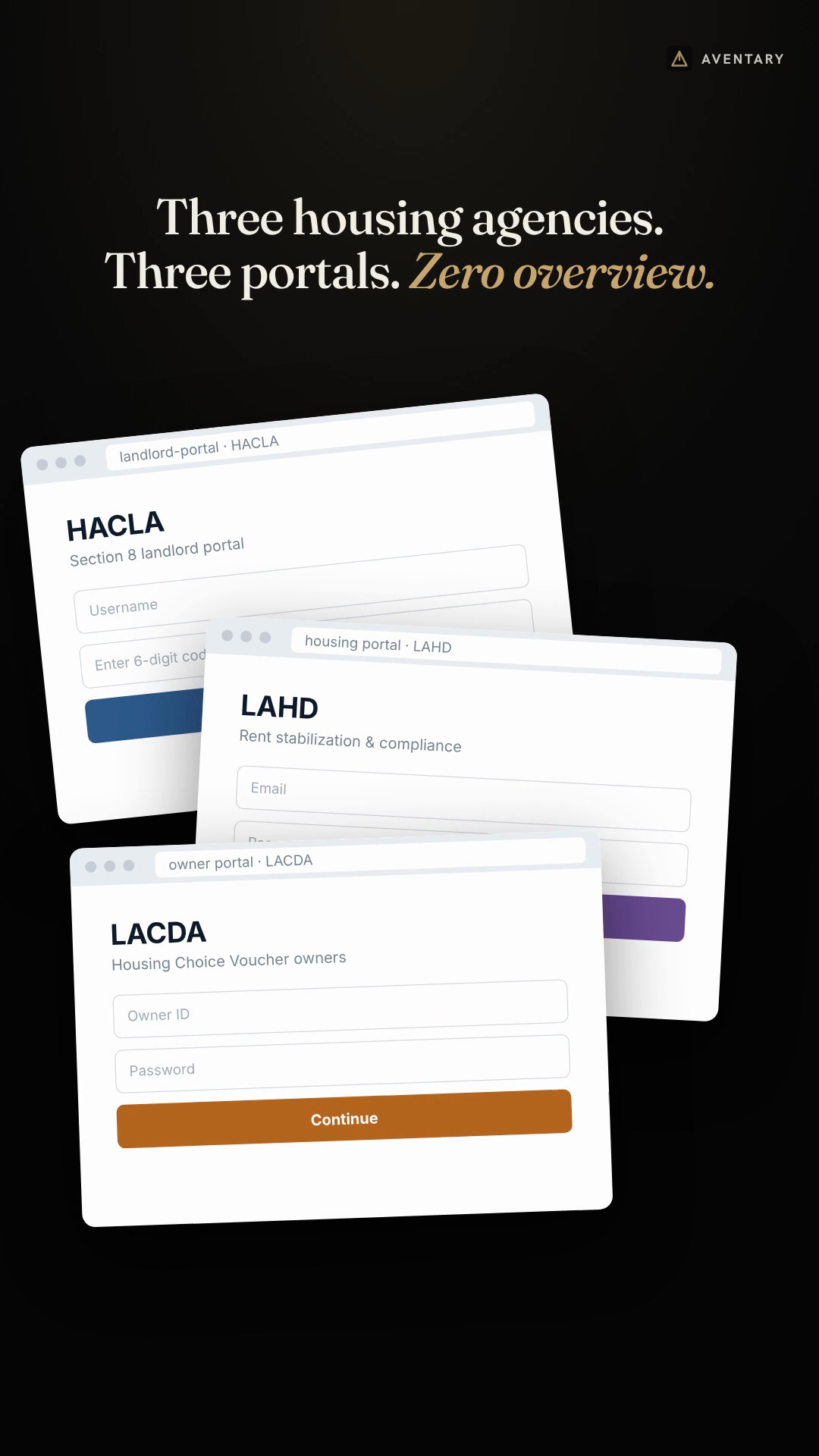
Three Housing Agencies. Three Portals. One Screen.
An LA landlord with Section 8 units signs into three systems that do not talk to each other. HACLA for Section 8 tenancy, LAHD for rent stabilization and compliance, LACDA for Housing Choice vouchers. Compliance Hub puts all three on one screen, syncs holds and abatements every morning, and flags an abatement before the rent stops. Checking an account went from five to ten minutes down to under a second, with fifteen people working off one synced hub.
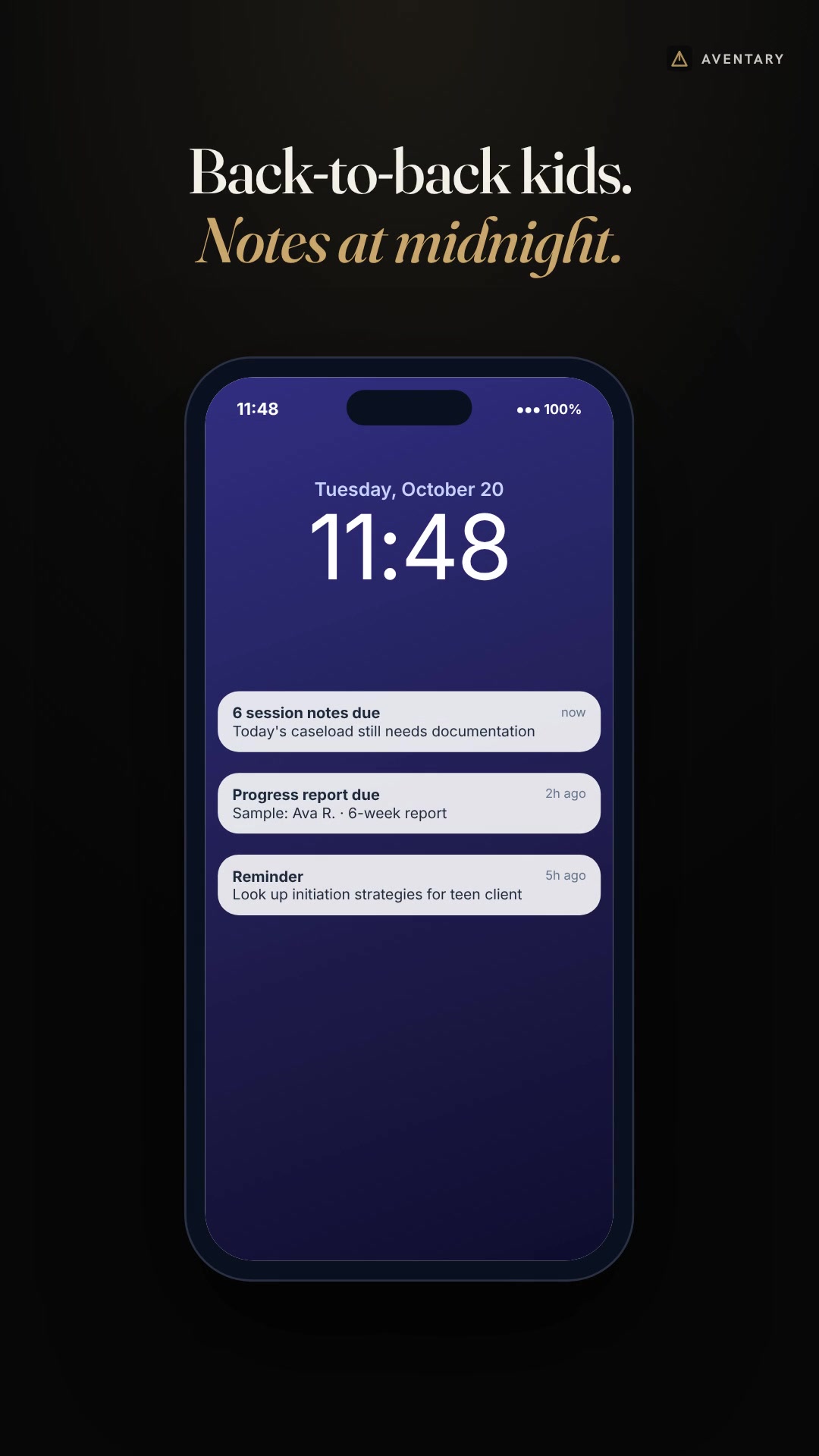
Back-to-Back Kids. Notes at Midnight.
A speech-language pathologist sees children back to back all day, then writes the session notes at midnight. SLP Session Log takes dictation the way the therapist actually talks and returns a structured SOAP note, with cue level, goal progress and the parent signature captured in the room. The same app puts 246 recorded training sessions behind one search box and answers a clinical question with the exact minute to watch. About ten seconds to a cited answer.

The Adult in the Room Can Answer These Three Questions.
Fifteen years deciding which features get built, reduced to three questions. Who is the role. What changes for that role. What it is worth to the company once you do the math. Then he runs a customer service order-lookup bot through all three: two minutes down to ten seconds, times 500 reps, 20 to 30 percent of their time back. Answer all three and you have a pitch.
I Sent a Working Tool. He Sent Back a Prettier Mockup.
A client replied to a working, fully integrated tool with a prettier artifact his Grok bot rendered in a minute. It stings. It also explains exactly why he hired me in the first place: a chatbot rendering is not scalable, not safe, not governed, and being right half the time is not a foundation. A week from first contact to a working tool he could actually comment on.
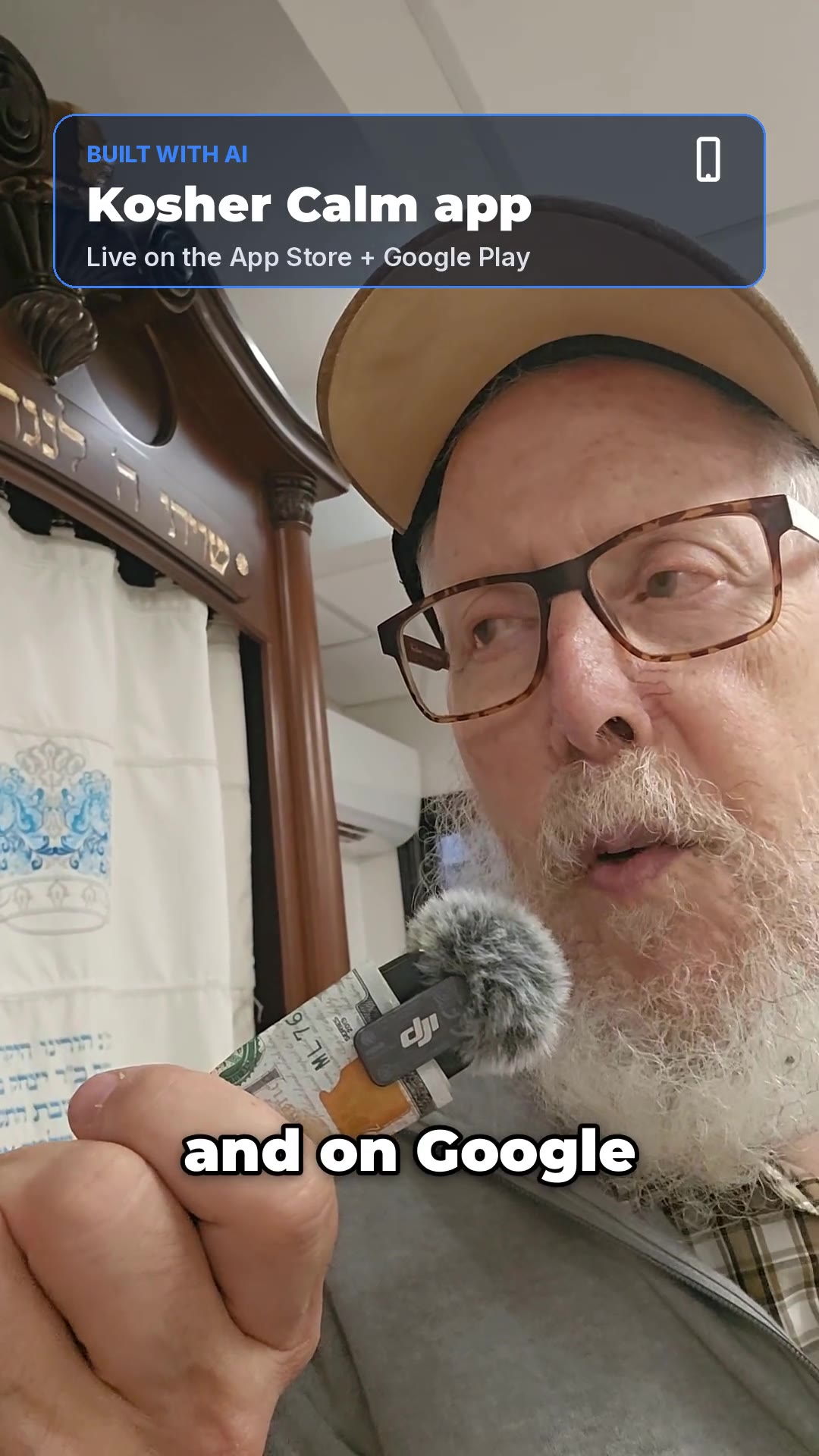
He Built an App With AI. He's 84.
Aryeh Siegel used AI to build Kosher Calm, which is live on the App Store and Google Play right now. He also runs contracts and complicated correspondence through it. Asked what the right age is to start using AI, he answers with his own.
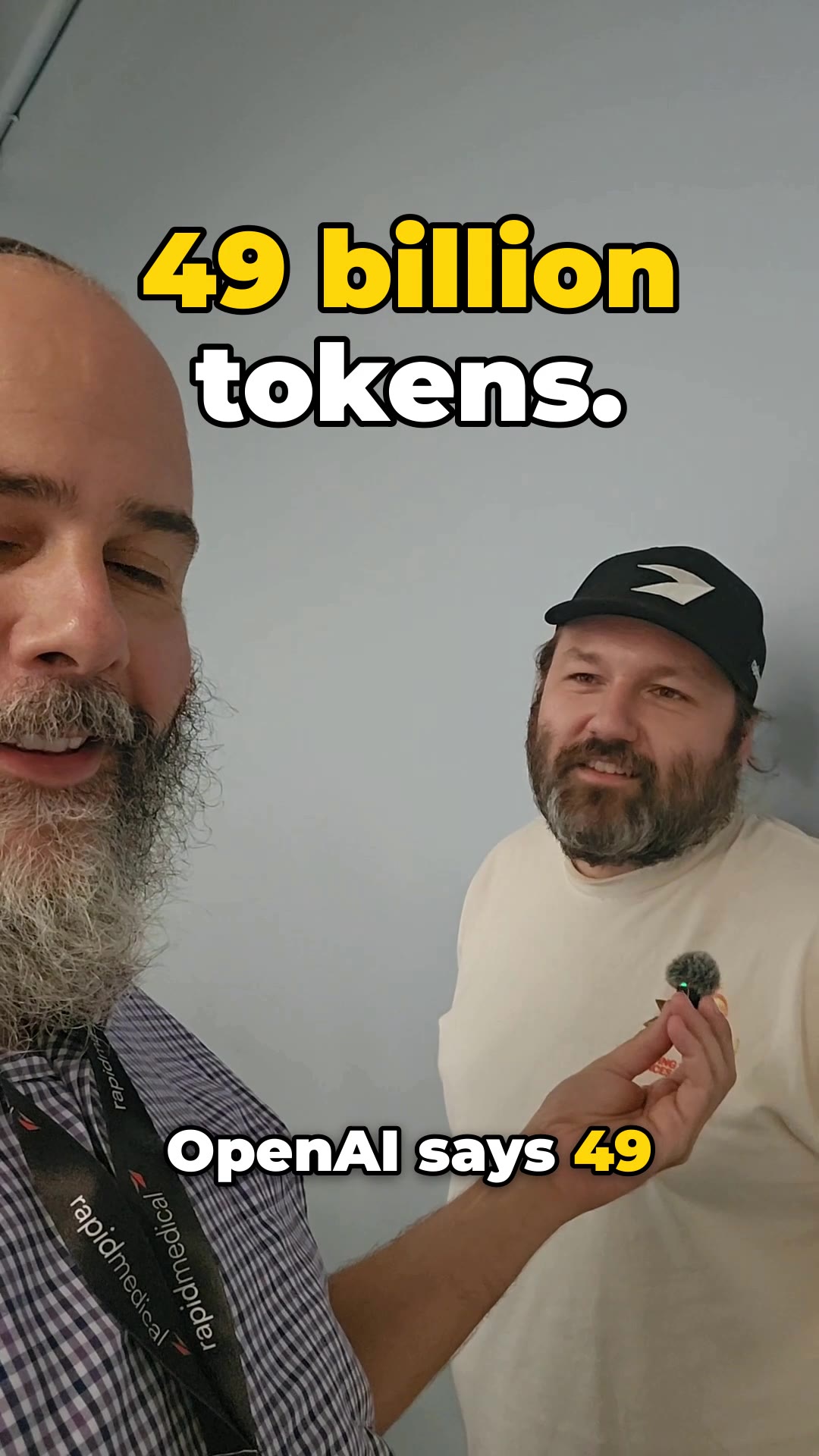
49 Billion Tokens. Here's What a CTO Does With Them.
Jacob Langlois runs technology at Rapid Medical and has put 49 billion tokens through AI: building products faster, investigating issues, running daily operations. The use he singles out is pulling scattered, disparate data sources into one narrative when something complicated has gone wrong.
Four Predictions. The Fourth Upends How Teams Work.
Executives have stopped asking for the app and started asking to be trained. The people who could build it no longer want to, which opens a whole category of work. Neurodivergent operators are outrunning tools designed for the average user. And chat is coming inside Claude and ChatGPT, which moves where the work actually happens.
Rules Make Your Agent Fragile. Principles Make It Scale.
A stalled agent build I joined last week had a prompt written as a rule book — when this happens, do that — which passed testing and fell apart in production. The team's instinct was to add more rules, which compounds the problem; the fix is telling the agent what to optimize for and letting it decide.
Flows Aren't Dead. They Just Got Promoted.
Flow used to be automation; with AI routing, prioritizing and drafting inside your revenue engine, it becomes the layer that checks the AI''s output and catches what the model missed. A lead scored low priority that belongs to an account with an open renewal is exactly the case a deterministic rule catches and a model does not.
Stop Asking People to Close the Door. Fix the Door.
For years I asked everyone to please shut the door behind them, and for years they left it wide open — until a self-closing hinge solved it in an afternoon. When a problem looks systemic and unfixable because everyone keeps doing the same thing, that is usually a sign you are attacking human friction with willpower instead of designing around it.

Merchant and Financial Loans Instant Decisions

4 Disciplines for RevOps and AI
How to Use AI Browser Agents to Automate Research & Tasks
Many people believe AI cannot directly take action or perform research inside a web browser on your behalf. In this video, we discuss how delegating browser tasks to an AI agent can save significant time and streamline overwhelming projects.

She's Rebuilding Her Shopify Store by Talking to ChatGPT.
A florist launching a curated rental collection is updating her Shopify site by telling ChatGPT what she wants, through a plugin set up on the spot. No developer, no agency, no ticket queue — this is what AI adoption actually looks like at the small-business end.

They're Building Your AI and Can't Make a Clean Flow Map.
A vendor pitched an AI build with a flow map they clearly made by hand, typos and all, when the tool they are selling you would have produced a clean one in a minute. If they won''t use it on their own deliverable, ask what else they are doing the slow way.
Agentforce Coworker Shipped. Without Clean Data It's a Liability.
One search box instead of navigating the whole CRM, pulling from your entire revenue stack — but only what lives inside Salesforce, and only if the processes and data underneath are clean. The feature is powerful; turning it on without an owner and governance is the part nobody is talking about.
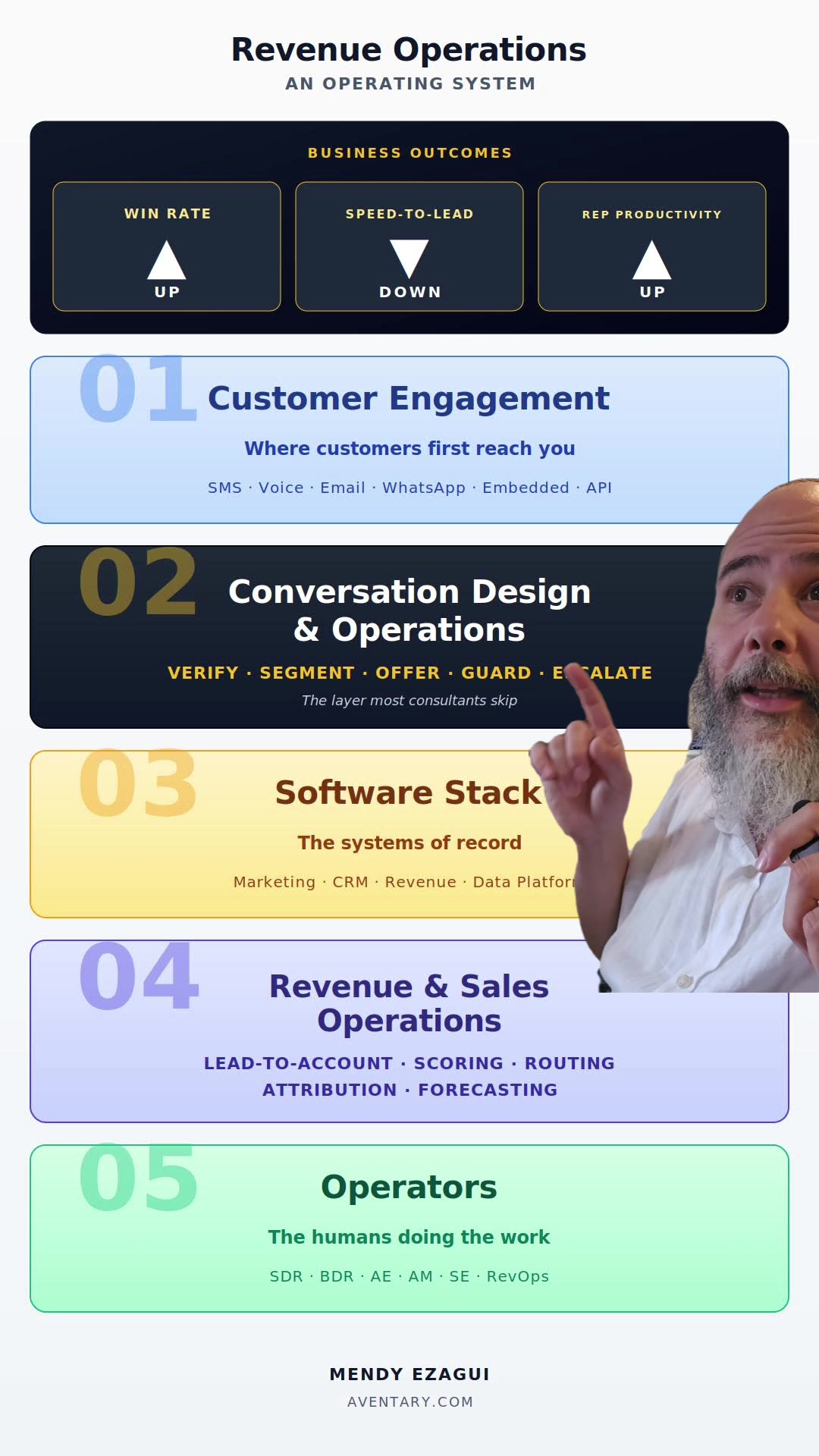
Everyone Designs the Stack. Nobody Designs the Conversation.
Between business outcomes at the top and the software stack underneath sits a layer almost nobody writes down: who you talk to, how you talk to them, when you escalate, and what you never say. It is agnostic to whether a human or a machine is doing the talking, which is exactly why it matters more now.
Day Three of a Voice AI Go-Live. Here's What Actually Happened.
RingCentral fought us on day one, hallucinations needed guardrails, and by day two the agent was resolving whole calls and warm-transferring the rest with enough context that one caller said thank you for not making him repeat himself. One caller was frustrated at reaching a machine at all, and the humans asked us to leave it running longer.
Your Agent Didn't Fail. Your CRM Data Did.
Agents in sales and revenue ops mostly break on foundations — ICP, routing, mapping, duplicates — and AI just makes those failures visible faster. The fix is contractual as much as technical: the outcome, the metric, and the data elements required belong in the SOW as a line item, not in a separate technical workstream.
Nobody Has a Clue What's Happening in AI. Including the Experts.
A public service announcement for anyone quietly panicking that they are behind: nobody has the whole picture of where AI is going, and the people who sound like they do are performing. Chill out.
AI Can Fake Every Metric You Measure by Lunchtime.
SLAs, activity counts, emails sent, time-to-route — automation produces all of it at volume, which means none of it tells you anything anymore. What survives is the part AI can''t do: conversation content, sentiment, when a deal starts slipping, talk-versus-listen ratio.
AI Told Me to Pass on the Work. A Friend Told Me to Take It.
I was working a problem through AI and it advised caution on a certain kind of engagement, which I very nearly accepted at face value — until someone who actually knows my skills said the opposite, and was right. Feed it your ICP and your frameworks and let it accelerate you; do not let vanilla AI make the call.
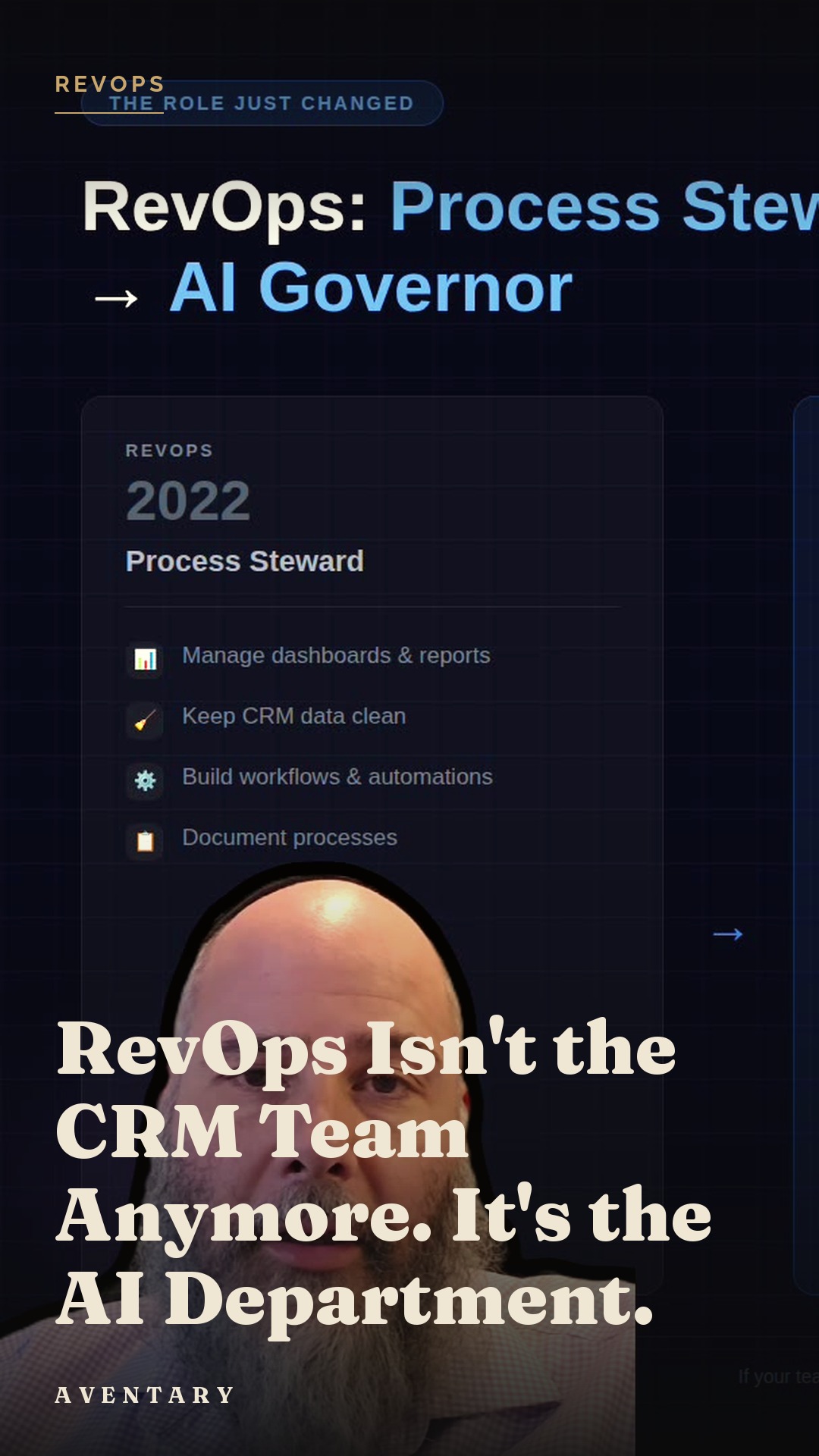
RevOps Isn't the CRM Team Anymore. It's the AI Department.
Deciding how agents operate, what data they trust, and which actions they can take is not an IT question — it lands on RevOps, in responsibility and not just in title. Most RevOps leaders haven't made that transition, and dashboards plus data hygiene is a 2022 job description.
Your Best Leads Die in the Three Inches Between Marketing and Sales.
Marketing scores the lead, hands it to the CRM, and nothing happens — no routing, no owner, no clock. The fix isn't another alignment meeting; it's engineering the handoff so routing, flagging, an SLA, and a fallback all fire without anyone deciding to act.
Salesforce Just Gave Starter and Pro Suite AI for Free.
Small and mid-sized businesses now get AI inside the CRM at no additional cost, which is the first time the smaller player has had this on equal footing. Three things have to be in place before you switch it on, or it produces noise in your CRM rather than leverage.
It's Not Prompting. It's Critical Thinking.
Thirty minutes before a client call, an unrelated vendor mentioned a tool that solved the exact problem I was about to present on — and it turned out the client already owned it. AI restitched the narrative in time; what it did not do was notice the opening or decide it was worth taking.
Ask Your Team the Top 20 Accounts. Watch the Room Go Quiet.
Most teams have inbound, outbound, cross-sell and expansion motions running, and still cannot name who to call today or why. That gap is where AI actually earns its keep — not generating more leads, but deciding who, when, and what to lead the call with.
They Were Leaking 25% of Their Leads and Didn't Know It.
Existing contacts were filling out forms to learn about new products, and because they were already records in the system nobody treated them as inbound — so they were ignored. The fix was not a tool: one engagement lifecycle, one SLA, one routing model, instead of five different paths depending on how someone was previously recorded.
You Don't Need a New Tool. You Need Someone to Look at the Data.
A client was burning budget on spam leads and already had everything needed to stop it. Source URLs, name and email pattern matching, a thin layer of predictive scoring on top — nothing bought, nothing built, just someone actually looking at what was already in the system.
Don't Modernize Old Thinking. Rethink the Design.
A major RevOps implementation, a full sit-down with the SI executive, and AI never came up once. Designing 2026 sales workflows with 2024 architecture on a newer platform is not modernization — the question was never where AI gets added afterward.
Bolting AI Onto Your Workflow Isn't a Strategy.
Most teams are layering AI on top of steps that already exist, which makes it an amplification layer and nothing more. Built from the ground up instead, it becomes a decision layer and a workflow layer — and that difference is fundamental, not cosmetic.
One Model for Everything Is a Habit, Not a Strategy.
The first AI sales agent I built on Salesforce had exactly one option: OpenAI. Months later Gemini arrived in the platform, and the point is not which one wins — it is that routing every task to a single model stopped being defensible the moment you had a choice.
Stop Tuning Prompts. Your Knowledge Base Is the Bottleneck.
Ask an associate for your top ten accounts and a marketing plan, and the answer is only as good as how cleanly the CRM is structured — AI works exactly the same way, matching your question against its knowledge base before it does anything else. Teams pour hours into prompt iteration and almost none into the structure the prompt is reaching into.
Nobody Searches for Products Anymore. They Search for Outcomes.
Search is shifting from products to outcomes: buyers will stop researching coffee machines and start telling an AI that already knows them to just solve for great coffee. This video breaks down what that changes on both sides of the transaction — how you buy software internally, and why leading with your product instead of the outcome stops working.
Your Hyper-Customized Agent Works. That's the Problem.
Build a road from every house straight to the grocery store and the first residents love it — right up until the city has a fire department, a school, and ten thousand people. The same logic decides whether your sales AI agent becomes infrastructure or something fragile you rebuild for every next use case.
Stop Asking Why. Ask What the Practical Implication Is.
"Why do we need this?" puts people on the defensive and rarely gets you a real answer. Swapping in "what is the practical implication of this decision?" surfaces whether the person proposing it actually understands the use case — and pulls everyone back toward business value.
Every Suggestion in Your Meeting Is Momentum or Risk Aversion.
Once you can hear which of the two a suggestion is coming from, meetings stop being a fog of opinions and become a legible set of trade-offs. Two real examples — one that cut weeks of friction, one that added it — and where I sit on the aisle.
Let AI Flag Your Spam Leads. Here Are the Four Columns.
A client had a lead list they couldn't trust, so we pushed the whole export through AI and asked it to show its reasoning — not just its verdict. Four columns turn a black-box judgment into something you can audit, and the tell on the best-disguised spam lead was a mismatch nobody would have caught by eye.
Your Lead Score Is Four Different Scores. Stop Collapsing Them.
Fit, engagement, intent, and predictive are four separate reads on the same lead — most teams mash them into one number and lose the signal. Using hiring as the analogy, this breaks down what each score actually measures, why small companies blend them, and why you have to split them apart as you scale.
The Front End of Lead Scoring: Fit, Engagement, Intent, Predictive.
Four scores get collapsed into one number because they all sound like the same thing, and the hiring parallel makes the difference obvious: a resume that fits, a candidate who follows you, one who says they want the job, and a model that says they will take it. Same four questions, same order, applied to leads.
Nail the Narrative First. The Details Write Themselves.
Before you build the deck or open your mouth, answer three questions: who is this for, what is the 30-second version, and what do you want them to walk away with. Get that setup right and cross-functional collaboration stops being a negotiation, because the message is already tight.
Your Title Doesn't Define You. You Define It.
A line from the Chassidic masters that has stuck with me: a person''s place doesn''t honor them, the person honors their place. Title, company, circumstances — none of it defines you, and bringing purpose and integrity into a room that lacks both is leadership before it is anything else.
The Lead Response Curve Has a Second Peak. Most Teams Miss It.
Conversion drops hour by hour after a lead comes in, exactly as you would expect — and then jumps again the next morning, which nobody expects. Pooling data across clients showed why: if you missed your one-to-two hour window, stop chasing and reach out between nine and twelve the next day instead.
One Agent Per Department Just Rebuilds Your Silos.
Companies are deploying a billing agent and an order agent and wiring neither to the other — which recreates the exact handoff problem that made human departments frustrating in the first place. This walks through why fragmented agents return fragmented answers, and what orchestration across 250+ agents looks like when someone does it properly.